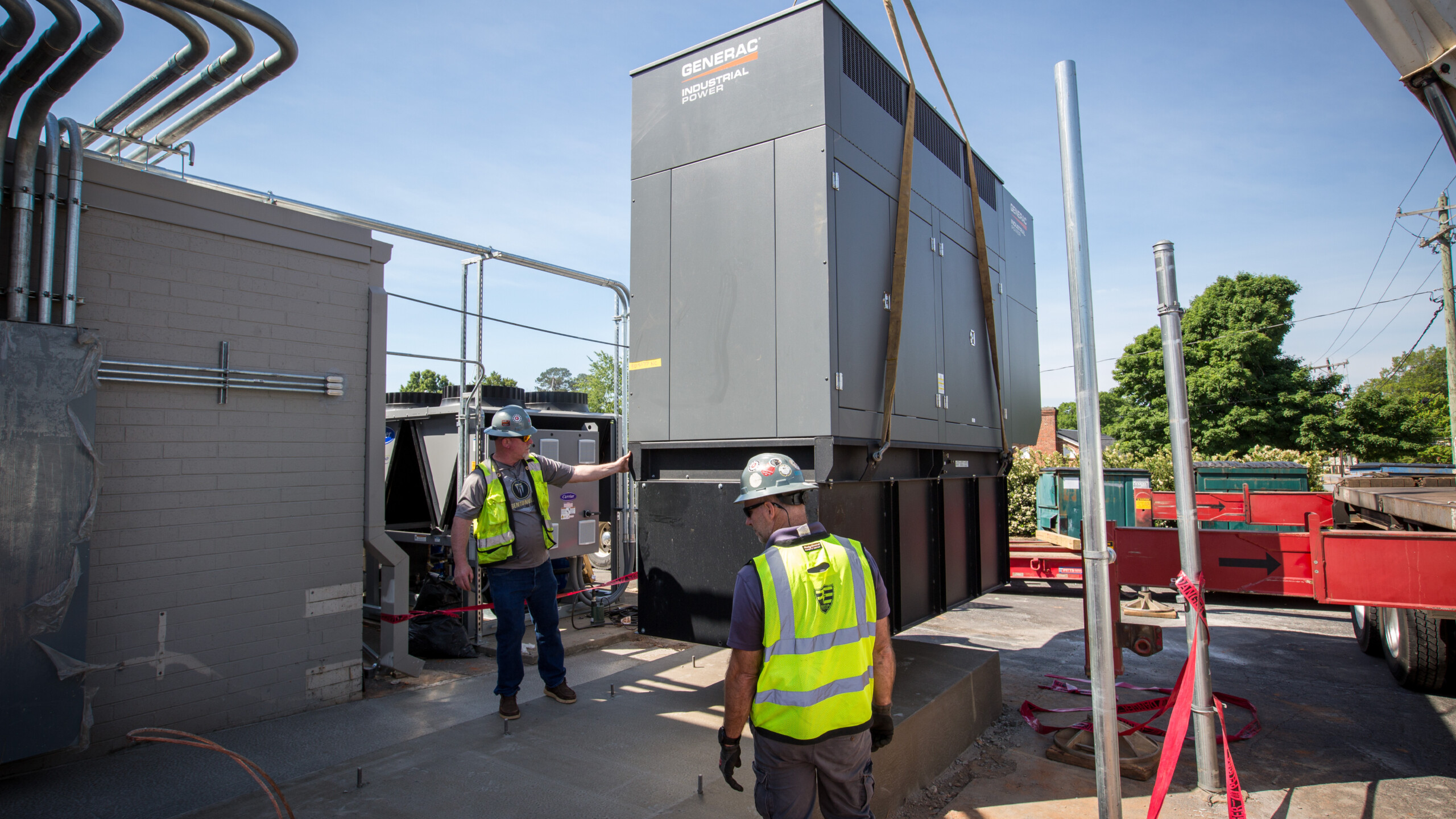
When utility power fails, an industrial facility doesn’t get to wait for it to come back. Production stops, refrigerated product and process-critical equipment are at risk, and life-safety systems have to keep working. Fountain designs, installs, and maintains standby generator systems for industrial facilities across North Carolina and the South Carolina upstate, with the transfer switches, distribution, and controls that make them work the moment you need them. We work with systems of all sizes and fuel types, so you get the right fit for your loads, not a one-size-fits-all package.
Industrial Capabilities
INDUSTRIAL BACKUP GENERATOR
Keep Operations Running
- Maintain production lines, controls, and process-critical equipment through an outage.
- Protect refrigerated, temperature-sensitive, and time-sensitive product.
- Keep IT, networks, and UPS-backed systems online.
- Avoid the cost of lost production, missed shipments, and restart time.
Protect People & Equipment
- Keep life-safety systems such as egress lighting, alarms, and fire pumps powered.
- Prevent damage from abrupt power loss to motors, drives, and sensitive controls.
- Ride through storms and extended utility outages with confidence.
- Keep security, access control, and monitoring systems active.
Built to Code, Built to Last
- Designed around NEC Articles 700, 701, and 702 and NFPA 110.
- Automatic transfer switches sized and coordinated with your distribution.
- Commissioning and load testing before the system goes into service.
- Ongoing maintenance and testing to keep the system ready.
Frequently Asked Questions
Common questions
What is an industrial standby generator system?
An industrial standby generator system supplies emergency electricity to your facility when power from the utility is lost. The generator is the engine and alternator, but the system also includes the automatic transfer switch (ATS), distribution equipment, fuel supply, and controls that detect an outage, start the generator, and move your loads over to it.
Unlike a portable unit, a permanently installed standby system starts and transfers automatically, so critical operations are covered even when no one is on site.
How do I know what size generator my facility needs?
Sizing starts with a load study: which equipment has to keep running, how much each piece draws while running, and how much extra current motors and large loads pull at startup. From there, the loads are grouped by priority, such as life safety, legally required, and optional standby, so the generator covers what matters without being oversized.
Because every facility is different, we recommend having an electrical contractor evaluate your actual loads rather than sizing from square footage or a rule of thumb.
Which fuel type is right: diesel, natural gas, or propane?
Each has trade-offs. Diesel is common for larger systems and stores on site, which keeps you independent of outside supply, but the fuel needs to be maintained and tested. Natural gas is convenient where a reliable utility supply exists, though it depends on that supply remaining available during the same events that can interrupt power. Propane stores on site and fits some facilities well.
The best choice depends on your load, runtime requirements, site conditions, and local permitting rules, and we can walk through those with you.
What is an automatic transfer switch?
An automatic transfer switch, or ATS, senses when utility power fails, signals the generator to start, and transfers your loads to generator power once it is ready. When the utility returns, it transfers back and lets the generator cool down and shut off. Facilities with different priorities of loads, such as life safety and standby, often use more than one transfer switch.
What codes and standards apply to a standby generator?
Emergency and standby power systems are covered by the National Electrical Code, including Articles 700, 701, and 702 depending on how the system is classified, and by NFPA 110, which addresses installation, performance, testing, and maintenance of emergency and standby power systems. Local jurisdictions, and in some cases emissions and air-permit requirements, add their own rules.
We design and install to the applicable requirements and coordinate with the authority having jurisdiction.
How long does an installation take?
It depends on the size of the system, equipment lead times, site preparation, permitting, and how the new equipment ties into your existing distribution. Larger industrial systems often involve long lead times for the generator and switchgear, so it helps to start planning early. We work with plant managers and general contractors to schedule tie-ins that limit downtime.
How often does a standby generator need to be tested and maintained?
Standby systems should be exercised and inspected on a regular schedule, with periodic load testing and servicing according to the manufacturer's recommendations and applicable standards such as NFPA 110. A generator that has never been tested under load is a generator you can't be sure will work. Our maintenance team can include generator and transfer switch verification in your preventive maintenance program.
When is a good time to install a standby generator?
Before you need one. Lead times, permitting, and installation planning all take time, and the middle of an outage is the wrong moment to find out your facility is unprotected. If you are planning a plant expansion, new line, or major electrical upgrade, it is also an efficient time to build standby power into the design.
Get Started
Ready to talk about INDUSTRIAL BACKUP GENERATOR?
Tell us about your facility and our team will help you plan the right solution. Prefer to talk it through? Call (828) 287-4343.